XR Solutions: Simple Gadgets or Genuine Performance Tools?
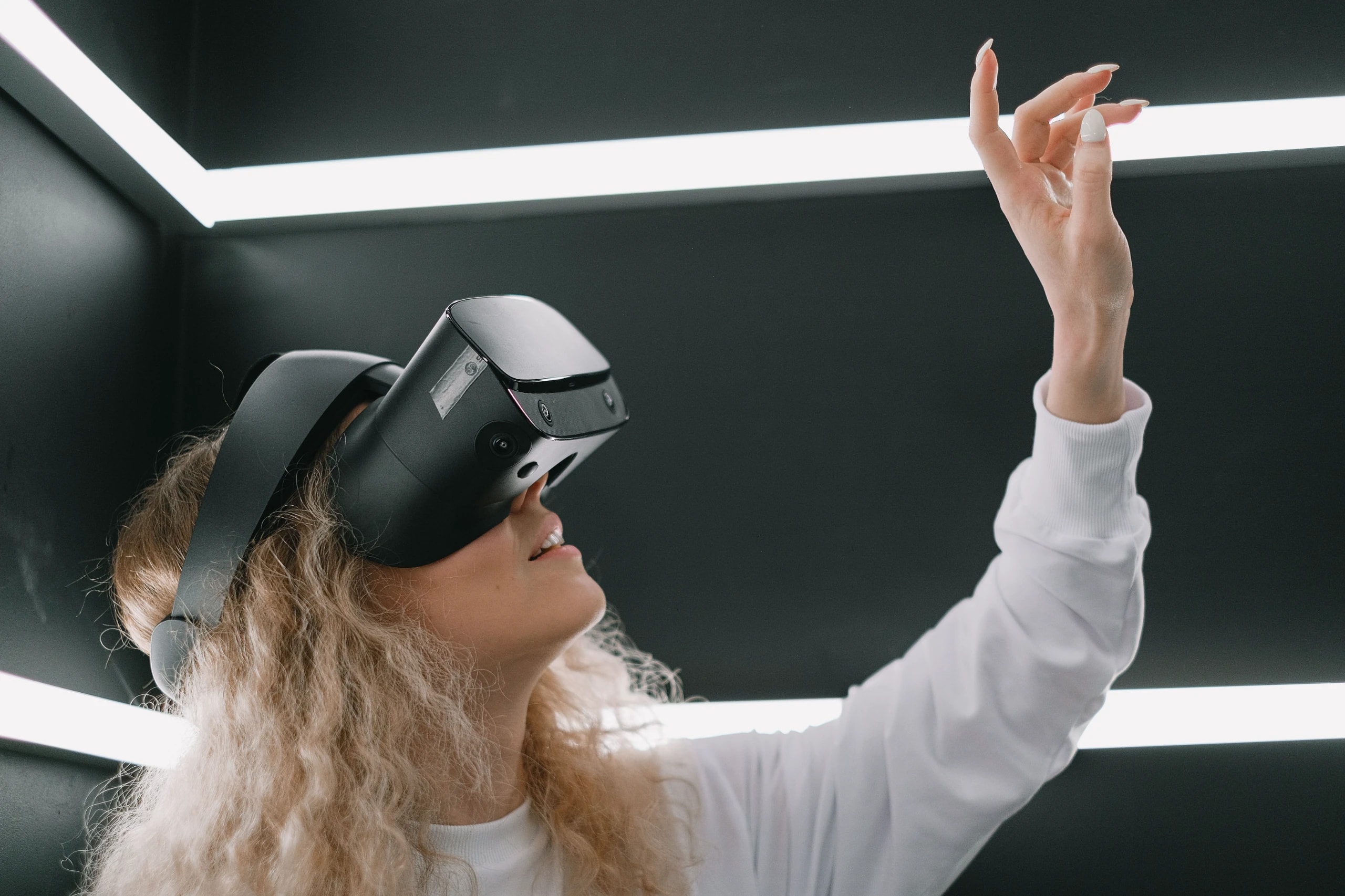
Virtual and augmented reality headsets have long been associated with the image of a spectacular technology, but one still far removed from industrial realities.
Today, that perception is changing.
In industry, extended reality (or XR, Extended Reality)—which includes virtual reality (VR), augmented reality (AR), and mixed reality (MR)—is increasingly being studied and deployed to address very concrete challenges: training teams, supporting maintenance operations, facilitating access to information, and enhancing risk prevention (McKinsey, 2025).
But one question remains crucial:
At what point does an XR solution stop being a gimmick and become a genuine work tool?
In industry, a technology has value only if it meets a concrete need. And that is likely where the difference lies between a gimmick and a genuine work tool.
XR Is Not an End in Itself
One of the main pitfalls when a new technology emerges is to start with the technology rather than the need.
An immersive headset can be impressive. A 3D rendering can be particularly realistic. A simulation can faithfully reproduce an industrial facility.But if the experiment does not address any operational issues, its value remains limited.
Recent research on the adoption of XR in industry also shows that the main barriers are no longer solely technological. Companies now have hardware and solutions that are mature enough to consider industrial applications. The challenges are shifting toward integration within organizations, alignment with business objectives, and the ability to move from a prototype to sustainable use (Akbaba et al., 2026).
This is what researchers describe as a “pilot trap”: promising experiments that struggle to become true operational solutions.
In other words, demonstrating XR is relatively simple. Creating a tool that’s useful in everyday work is another story.

When XR Meets a Real Business Need
The difference between a gadget and a tool therefore begins with a simple question:
What problem are we trying to solve?
In industry, several use cases are already providing concrete answers.
A Different Approach to Training
Training is probably one of the areas where the value of XR is most evident.
Rather than simply presenting a setup or a procedure, an immersive solution can allow employees to directly engage with their work environment, operate equipment, and simulate real-world situations.
The NIST (National Institute of Standards and Technology) emphasizes that VR and AR can be used to train employees to a defined level of performance, quality, and safety, with reproducible scenarios and results that can be tracked automatically (NIST, 2024).
The World Economic Forum cites, for example, the case of Midea, which combines virtual reality training, artificial intelligence, and automated certification. According to the company, this system reduced the time required to qualify for certain skills by 63 percent, from eight days to three (World Economic Forum, 2025).
In another example cited by the World Economic Forum, a training program incorporating VR and automated feedback reduced the training cycle time by 32% (World Economic Forum, 2025).
XR, therefore, does not simply replace traditional training with a more immersive experience. Instead, it can transform the way employees learn, practice, and validate their skills.
Preparing for and Supporting Operations
Maintenance is another particularly interesting area.
Visualizing a facility before an intervention, understanding the location of equipment, accessing contextualized information, or receiving step-by-step guidance can facilitate the preparation and execution of operations.
Recent research on industrial maintenance confirms XR’s potential to improve the efficiency of maintenance tasks, reduce certain errors, and shorten turnaround times, while emphasizing that its large-scale deployment requires integration tailored to the real-world constraints on the ground (systematic review on the adoption of AR in maintenance, 2025).
The technology thus becomes an interface between technical knowledge and action.
And this is precisely where the value of XR becomes significant: when information is no longer simply consulted, but directly accessed the moment an employee needs it.

Using XR to Better Prepare for High-Risk Situations
Safety is another area where immersion can provide real value.
Certain hazardous situations are difficult, costly, or impossible to replicate under real-world conditions: incidents at a facility, operational errors, fires, equipment failures… XR makes it possible to simulate these situations in a controlled environment and to have teams practice their responses to various scenarios without exposing them directly to danger.
A review of 41 studies on the use of XR for safety in high-risk industrial environments identifies potential benefits in terms of knowledge, performance, and preparedness for hazardous situations, while highlighting current limitations and the need for further research (Dodoo et al., 2025).
The International Labor Organization also views virtual reality and extended reality as technologies capable of transforming worker training—particularly in high-risk sectors—through immersive simulations that allow for training in situations that would otherwise be difficult to replicate (ILO, 2025).
Of course, XR does not replace existing prevention measures, procedures, or hands-on training. However, it offers an additional opportunity: to practice scenarios that are difficult to replicate in a real-world environment.
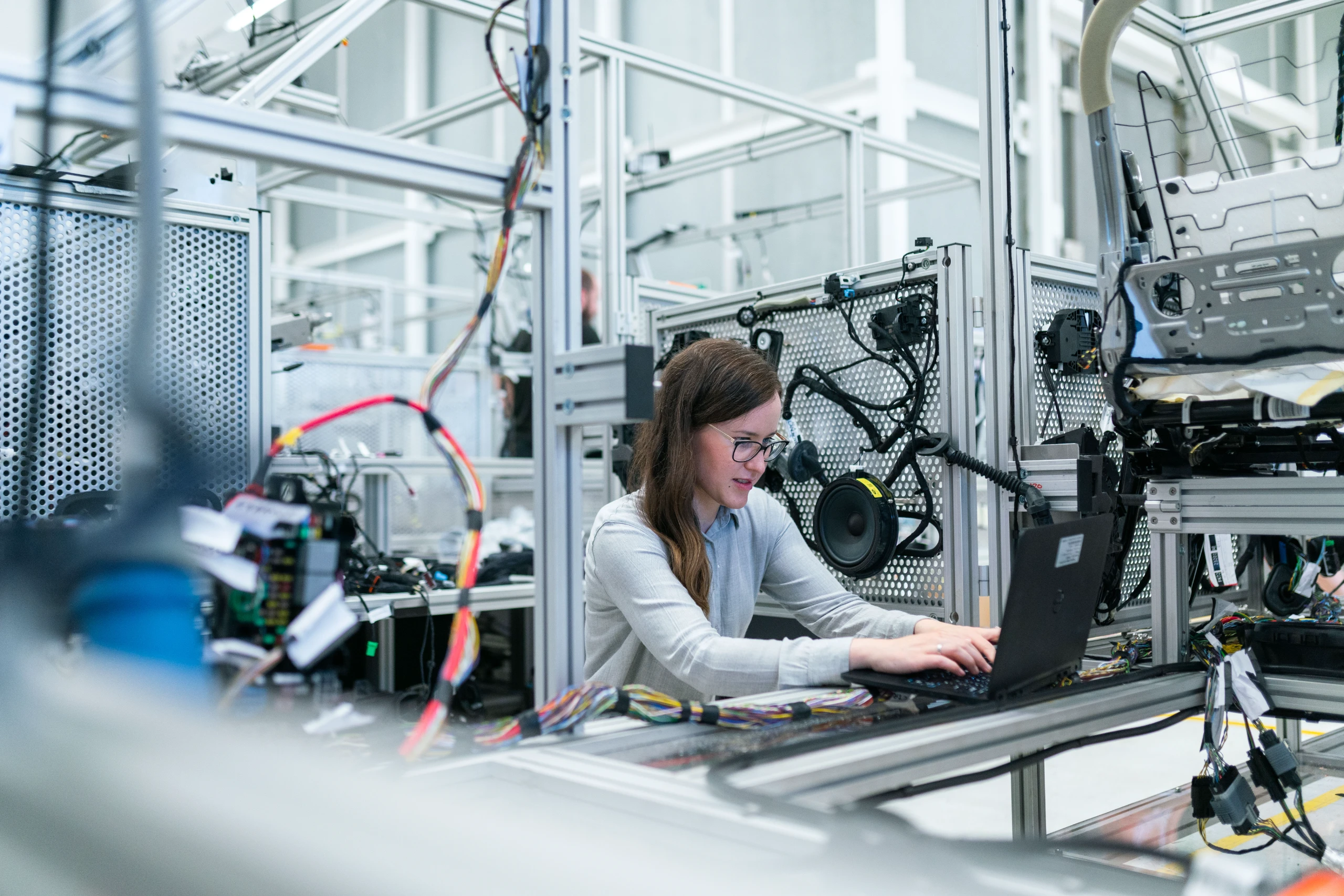
How can the value of an XR solution be measured?
The question of return on investment remains, of course, central.
As with any digital transformation project, it is not enough to simply observe that a technology works. It is necessary to be able to assess what it actually brings to the company.
Metrics may vary depending on the use case.
For training, for example, one could track the time required to develop skills, the number of people trained, or the ability to replicate and evaluate exercises.
For maintenance, metrics may include the time required to prepare for a service call, errors encountered, or the time needed to access technical information.
For prevention, the focus may be more on the number of simulated scenarios, the teams’ ability to identify risks, or changes in behavior when faced with certain situations.
This approach is important because the benefits of XR are not always immediately apparent.
Better preparation can prevent an error. A simulation can help an operator feel more comfortable during their first job. Information available at the right moment can save a few minutes on an operation.
Taken individually, these gains may seem limited. On the scale of an industrial site, however, they can have a significant impact.
The Transition from Pilot Projects to Daily Use
This is likely one of the main challenges currently facing industrial XR.
Companies now know how to test these technologies. The challenge lies more in transforming an experiment into a tool that teams use regularly.
The study published in 2026 on the adoption of industrial XR describes this challenge of moving from pilot projects to sustainable deployments. The authors explain, in particular, that the barriers are now more closely linked to organizational factors, change management, and alignment with business objectives than to the maturity of the equipment alone (Akbaba et al., 2026).
Adoption also depends on the user experience.
A study published in the International Journal of Information Management shows that the perceived value of XR plays an important role in the intention to adopt it, while user resistance can, conversely, hinder its deployment (Jalo & Pirkkalainen, 2024).
In other words, a solution can be technically advanced without actually being adopted.
Usability, ease of use, integration into work processes, and support for teams are therefore just as important as the technology itself.
So, is it a simple gadget or a genuine performance tool?
The answer is therefore not “XR is useful” or “XR is a gimmick.”
It can be either one or the other.
It all depends on how it is designed, integrated, and deployed.
An immersive experience that merely reproduces a 3D environment can be impressive.
A solution that uses this same representation to train an operator, prepare for a maintenance task, or simulate a high-risk situation already addresses a business need.
Technology is no longer the focus. Usage is.
At YZAR, this approach is at the heart of how we design our XR solutions: starting with industrial challenges to build concrete use cases around three major areas: training, maintenance, and prevention.
Because industrial technology isn’t meant to be merely innovative.
Above all, it must be useful, usable, utilized, and measurable.
Sources:
-
McKinsey & Company, Technology Trends Outlook 2025—analysis of immersive reality technologies and their potential across various sectors.
-
World Economic Forum, Insights from the Production Line for the New Industrial Workforce (2025)—Midea’s experience with the combined use of AI and VR for industrial training.
-
NIST (National Institute of Standards & Technology), Advanced Manufacturing Technology and Industry 4.0 Services (2024)—uses of VR and AR for industrial training.
-
Dodoo et al., “XR and Workers’ Safety in High-Risk Industries: A Comprehensive Review” (2025) — a review of 41 studies on the use of XR for worker safety.
-
Cordeiro et al., “Immersive Technologies for Evaluating Industrial Safety Training in High-Risk Environments” (2025), Frontiers in Virtual Reality—a systematic review of 37 studies focused on safety training.
-
International Labor Organization, Harnessing the Digital Revolution to Build Safer, Healthier Workplaces (2025)—the role of VR and XR in safety training.
-
Akbaba et al., “Exploring Organizational Readiness and Ecosystem Coordination for Industrial XR” (2026)—a study on barriers to adoption and the transition from pilot projects to industrial deployment.
-
“A systematic review of different adoption strategies for augmented reality in maintenance” (2025)—key factors for the sustainable adoption of AR in maintenance operations.