Let's go further on the use of AR!

Augmented Reality (AR) is the enrichment of reality through the addition of virtual elements. It might sound like science fiction, but it's not as complicated as you might think! Let's get to the heart of the matter of Augmented Reality.
How AR works
As mentioned above, AR is about including virtual elements in the real environment. This integration requires three devices: a camera to view the environment, an operating system to process the information and a screen to display the virtual elements. For a phone, for example, the camera will film the environment, the phone will process the information and this modified reality will appear on the phone's screen.
There are three ways of accessing Augmented Reality: the first is using a browser, the user will be able to live an Augmented Reality experience through a website. The structure will be based on the shape of the face for example, or a QR code in order to generate AR content. This is a method often used by online sales websites such as Général d'Optique for example with its online glasses service. The second way is to live an Augmented Reality experience through a pair of AR glasses. Today, this is quite common in the industrial sector for example and many brands have released their pairs of glasses, the Hololens from Microsoft for example. The system is such that small transparent screens are placed behind the glasses so that the field of vision is completely covered and the virtual elements are thus integrated into reality without the need for any movement on the part of the user. Finally, the last way to experience AR is through an application. This works in much the same way as the browsers, only with recognition of any image or object and with more precise tracking of these. Through this application, the user can access an Augmented Reality experience with their smartphone. These mobile applications have been multiplying over the last few years in many areas, from entertainment to retail, and it is estimated that to date, these applications have generated 3 million downloads on the App Store.
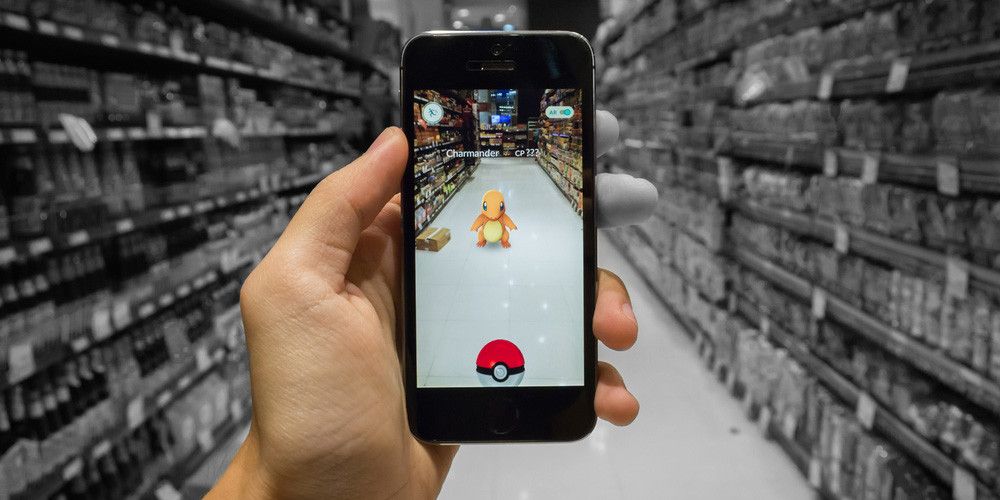
Pokémon Go: Augmented Reality mobile video game.
AR, for whom?
Using AR is becoming more and more common. Today, it is rare to meet people who have never tried AR at least once. This practice has developed widely and the trend is still accelerating. If AR is developing so much and will continue to do so, it is because the use of AR is open to many sectors and accessible to any individual, but also because it offers a multitude of possibilities for use. In terms of sectors of activity, AR is used in engineering as well as in the medical, sales, marketing and wine-making sectors, for example. Moreover, the diversity of ways in which it can be used makes it an increasingly accessible technology: many brands offer pairs of AR glasses to professionals and although the price range can be quite wide, the average price of a pair of these glasses is €1,500, which remains quite affordable for professional use given the opportunities that AR represents. Moreover, the possibilities of content creation with AR offer the possibility for professionals to easily integrate it into their activities or products.
All of the above was mainly for professionals. Let's not forget private individuals, for whom AR is also becoming more widespread. Today AR can be used by anyone with a smartphone (or tablet) and an internet connection. A report published by INSEE in 2021 tells us that 77% of the population aged 15 years or older owns a smartphone. This means that 77% of this population could be potential users of AR. In addition, the diversity of AR experiences available on the market means that any individual will be able to find utility and satisfaction in using this innovation. The market for AR glasses is also gradually opening up to individuals, as shown by the announcements of the main smartphone manufacturers (led by Huawei and Apple). But it will be the drop in the price of AR glasses that will really trigger the opening of the market to individuals.
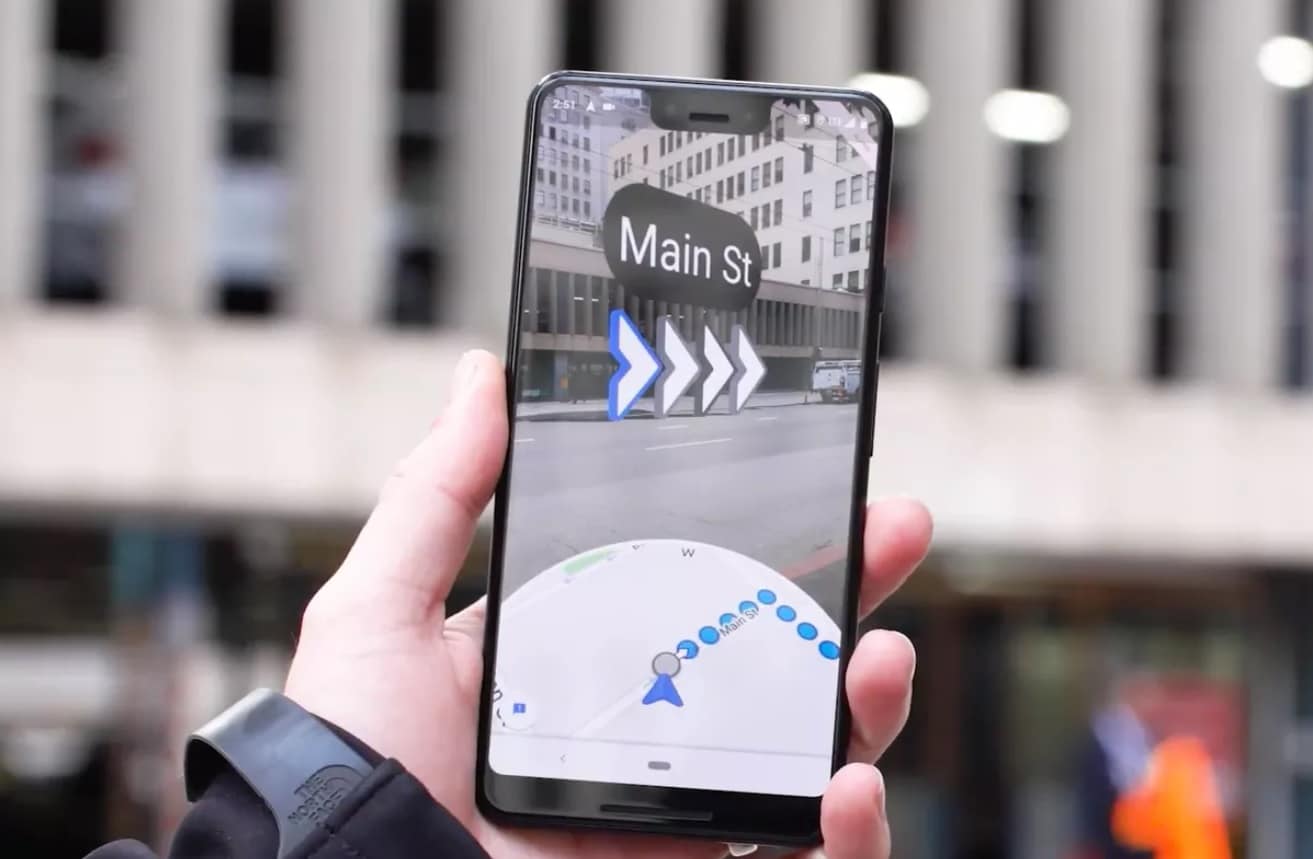
Using AR for a private individual to find his way around.
AR can be difficult to create but is easy to understand and use for both professionals and individuals, and whatever the medium, AR represents a new opportunity to work, learn, shop or play.