5 misconceptions about AR/VR to debunk
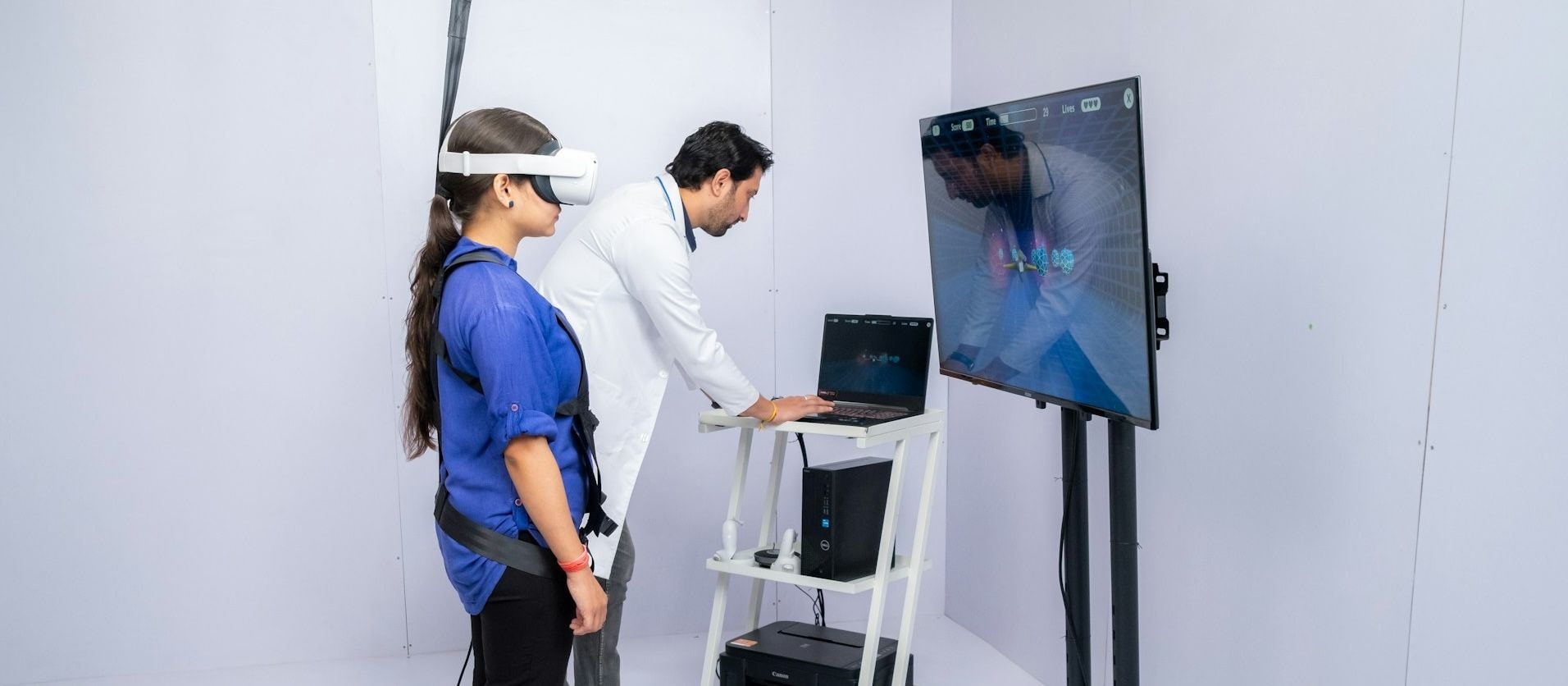
Long relegated to the world of video games and spectacular demonstrations, augmented reality (AR), virtual reality (VR), and more broadly XR technologies have evolved significantly in recent years. However, many misconceptions persist and continue to slow their adoption in organizations. At a time when headsets are becoming more accessible and comfortable, and their professional uses are multiplying (training, industry, healthcare, maintenance, collaboration, etc.), it is essential to revisit these beliefs in light of recent progress. In this article, we debunk five major misconceptions about AR/VR, basing our arguments on reliable, recent, and recognized sources.
Misconception n°1: “AR/VR is too expensive” – an outdated perception
An idea inherited from previous generations
For a long time, AR/VR suffered from an elitist image: expensive equipment, complex infrastructure, custom development. This perception was partly justified in the early 2010s, when devices required powerful PCs and external sensors.
Rapid democratization of hardware
Since 2023, the market has profoundly changed. Standalone headsets (without PCs or external sensors) have become mainstream, with much more affordable entry-level prices. Some consumer models are now available for less than €400, while incorporating mixed reality and high-performance hand tracking features (numerama.com). At the same time, growth forecasts for the AR/VR market show strong momentum in the medium term, a sign of gradual industrialization and a structural decline in costs (distributique.com).
A cost to be weighed against business benefits
In many sectors (training, maintenance, design), AR/VR makes it possible to:
- reduce travel costs,
- accelerate learning,
- limit human error,
- and improve operator safety.
The challenge is therefore no longer just the cost of entry, but the return on investment (ROI), which is increasingly documented in professional projects.
Misconception nº2: “These are just gimmicky technologies” - understanding their real business value
Persistent confusion with video games
Video games have greatly contributed to the popularity of VR. But reducing AR/VR to mere entertainment obscures the essential point: the majority of current investments are for professional uses. According to market analyses, the healthcare, industrial, training, and education sectors are among the main drivers of XR adoption (globalgrowthinsights.com).

Photo from Patrick Schneider - Unsplash
Critical and strategic uses
Immersive technologies are now used for:
- training in hazardous environments,
- simulating complex scenarios,
- remote assistance using augmented reality,
- visualizing spatial data.
Major players are investing in these technologies for high value-added uses, including in large-scale industrial or institutional contexts (lemonde.fr). Far from being a gadget, AR/VR is becoming an operational tool, integrated into business processes.
Misconception nº 3: “VR headsets always cause discomfort” - what recent advances have made possible
A historically valid criticism
The first generations of VR headsets were often heavy, poorly balanced, and caused eye strain or motion sickness. These limitations long hindered adoption.
Major technological advances since 2024
Recent headsets now feature:
- high-resolution micro-OLED screens,
- thinner “pancake” lenses,
- eye tracking for foveal rendering,
- remote batteries to reduce weight on the head.
These innovations significantly improve comfort during extended sessions and reduce visual fatigue (auprogres.net).
 Photo from James Yarema - Unsplash
Ergonomics becomes a key factor Comfort is no longer a systemic obstacle but a central design criterion, particularly for intensive professional uses (training, engineering, collaboration).
Misconception n°4: “AR/VR is only for young people” - a simplistic view of its uses
A much more cross-generational adoption
It is misleading to associate AR/VR solely with “digital natives.” In fact, these technologies are widely used by experienced professionals, particularly in industry, healthcare, and education. Studies show growing adoption in training institutions, hospitals, and businesses, regardless of user age (globalgrowthinsights.com).
 Photo from XR Expo - Unsplash
Increasingly natural interfaces
Advances in gesture interaction, voice control, and eye tracking are making immersive experiences more intuitive and accessible, even for less tech-savvy audiences (auprogres.net). AR/VR is not a question of generation, but of relevance of use.
Misconception n°5: “I already know these technologies” - new key uses are emerging every day.
AR, VR, MR, XR: different realities
Many people think they “know” AR/VR after a simple demonstration. However, each technology meets distinct needs:
- VR: immersive training, safety procedure training or risk management, complex scenario simulation, design and prototyping, immersive collaboration,
- AR: superimposing information on the real world, assisted maintenance, on-the-job learning, remote assistance, reducing human error in logistics and production, projecting projects into their future real environment, data visualization
- MR (mixed reality): advanced interaction between the real and virtual worlds, hybrid experiences, adaptive user journeys.
Recent solutions increasingly combine these approaches within hybrid devices (marketgrowthreports.com).
A rapidly evolving ecosystem
Between new headsets, lightweight AR glasses, multi-platform software, and AI integration, capabilities are evolving at a rapid pace. What was true two years ago is often no longer true today (stylistme.com). Talking about AR/VR in the singular masks the diversity of solutions and use cases.
Conclusion
AR/VR technologies have long since moved beyond the stage of being mere technological curiosities. Now more accessible, more comfortable, and more mature, they are gradually establishing themselves as strategic tools in many sectors. Debunking these misconceptions allows for a more accurate understanding of the current challenges and paves the way for better-designed, better-scaled projects that truly create value.
Sources:
- IDC – Prévisions du marché AR/VR 2025–2029 (distributique.com)
- Numerama – Casques VR accessibles et démocratisation (numerama.com)
- AuProgres – Innovations hardware AR/VR 2025 (auprogres.net)
- Le Monde – Usages XR professionnels et institutionnels (lemonde.fr)
- Global Growth Insights – Marché AR/VR et secteurs d’adoption (globalgrowthinsights.com)
- Market Growth Reports – Évolution des dispositifs immersifs (marketgrowthreports.com)
- StylistMe – Tendances XR et fragmentation du marché (stylistme.com)