Digital twins: a revolution for industry and training
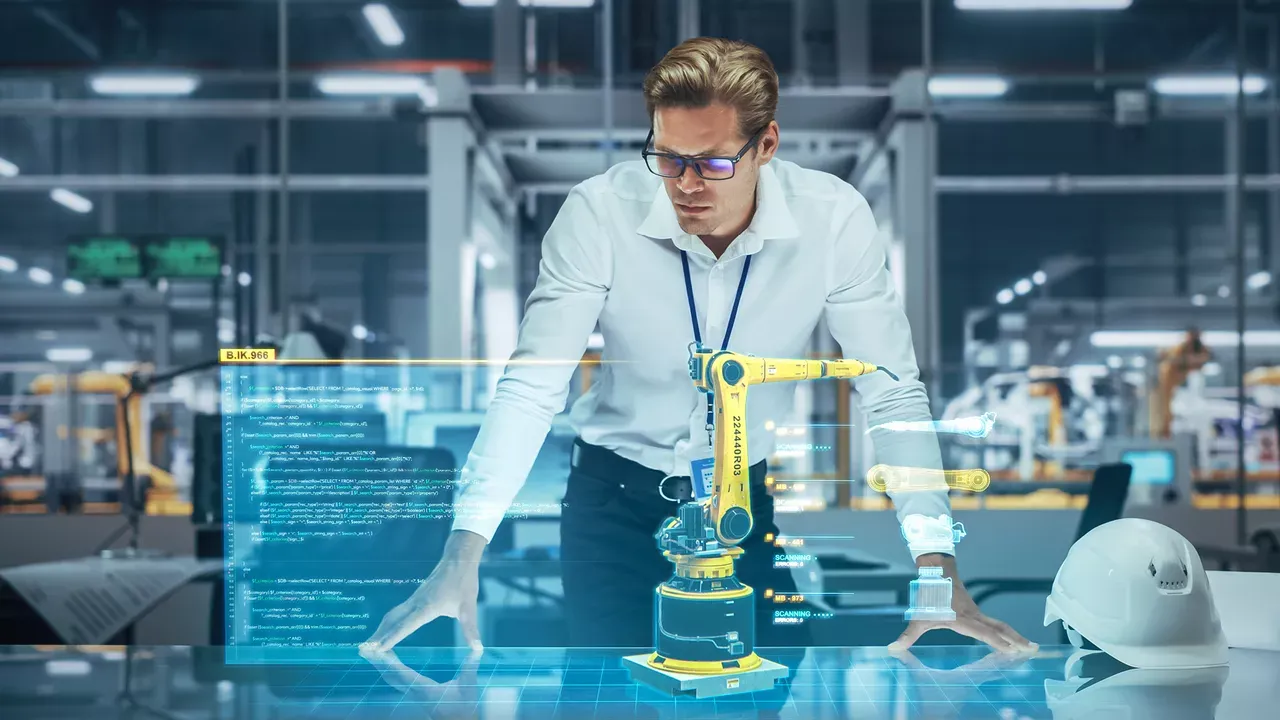
The rise of digital twins is profoundly transforming industrial and educational practices. These dynamic virtual replicas can be used to optimize design, production, maintenance and even training. As part of Industry 4.0, they meet the challenges of competitiveness, safety and innovation. This article explores their definition, key applications and future prospects.
What is a digital twin?
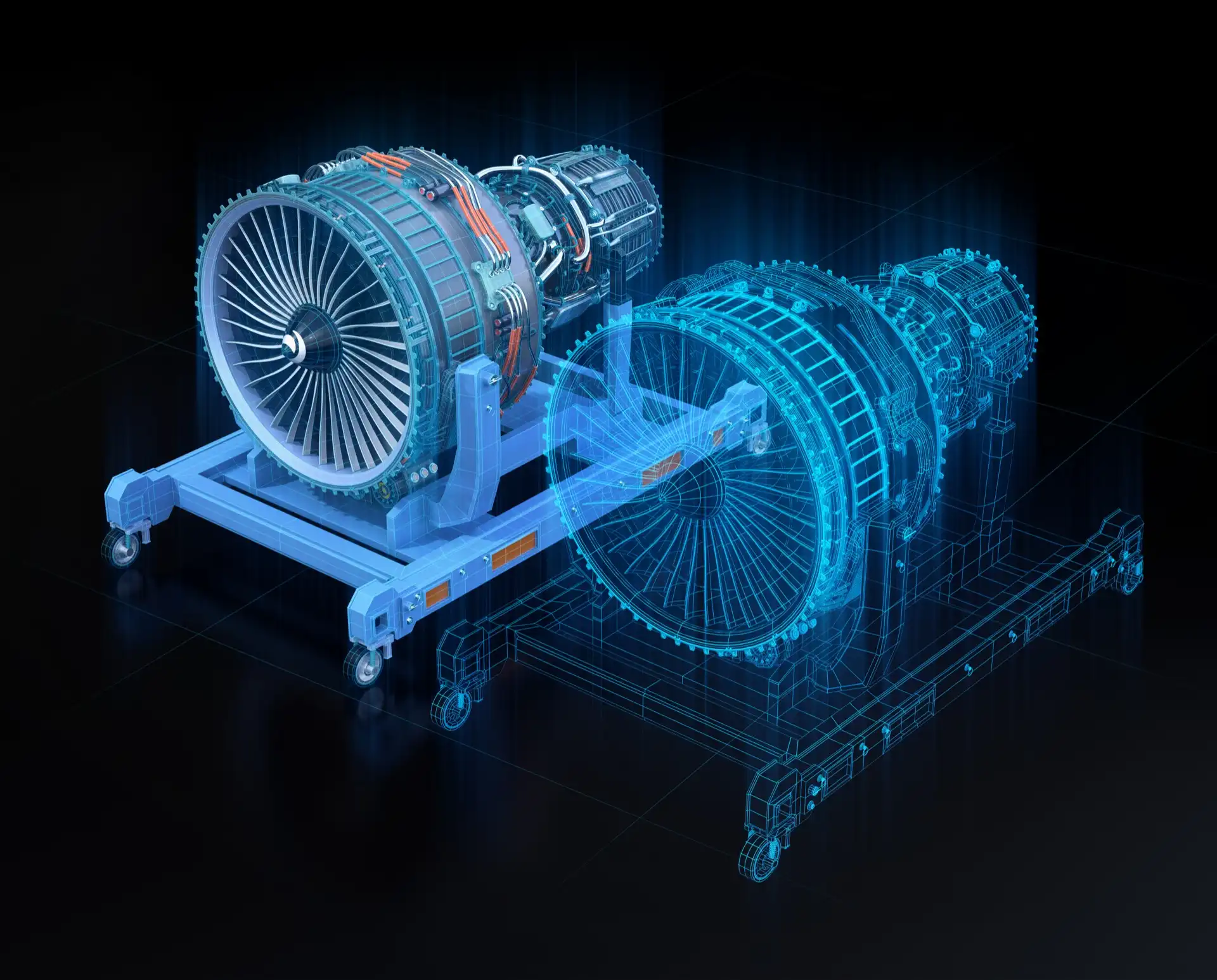
A digital twin is a dynamic virtual replica of a physical object, system or process. Powered by real-time data from IoT (Internet of Things) sensors, it faithfully reflects the characteristics and behavior of its physical counterpart throughout its lifecycle (Visiativ, Mieux comprendre la notion de Jumeau Numérique). Unlike a simple static simulation, the digital twin integrates artificial intelligence and machine learning to evolve in line with changes observed in the real world.
This technology offers a wide range of applications: optimizing industrial operations, reducing costs, improving productivity and enhancing safety. It is used in a wide variety of sectors, including aerospace, automotive, healthcare and real estate (ALFI Technologies, Jumeau numérique Industrie). It is estimated that by 2027, 89% of industrial companies will be using digital twins to improve their operational efficiency (Gartner, Digital Twin Adoption Trends).
Industrial uses of digital twins
Optimizing predictive maintenance
In the manufacturing and aerospace industries, digital twins play a crucial role in predictive maintenance. For example, Rolls-Royce uses these virtual replicas to monitor over 5,000 engine parameters in real time, reducing unplanned downtime by 30% (Andy Graham, 5 Ways Digital Twins Ensure Safe Maintenance Operations in Aviation). These tools also help to anticipate breakdowns with greater precision and optimize technical interventions.
Enhanced safety through simulation
Digital twins also enhance safety by simulating critical scenarios such as extreme temperatures or structural failures. These simulations help engineers to identify potential weaknesses and strengthen systems before their actual implementation (Arts et Métiers, Jumeaux numériques). In the automotive industry, this technology is used to virtually test vehicle aerodynamics, reducing prototyping costs by 25% while increasing fuel efficiency (McKinsey, The Digital Twin Imperative).
Immersive and personalized training
In the educational field, digital twins are revolutionizing industrial training. The JENII project, coordinated by Arts et Métiers, integrates these virtual replicas into an immersive environment to train engineers in complex systems (JENII, Placer les jumeaux numériques au cœur de la formation). The benefits of this approach include :
- Realistic immersion thanks to 3D simulation and augmented reality.
- Reduced risks associated with learning on real machines.
- Improved knowledge retention through interactive experimentation. By 2026, it is estimated that 60% of technical training courses will incorporate digital twins to reinforce the acquisition of practical skills (IDC, Future of Learning Technologies).
 Image credit : L'Essentiel de l'Eco
Accessibility for SMEs
While large companies such as Airbus and Renault are already fully tapping the potential of digital twins with advanced solutions integrating AI and cloud computing, simpler options are emerging for SMEs and ETIs. Accessible platforms enabling smaller structures to benefit from this technology too (SMC International Training, The Digital Twin Revolution in Industry 4.0). These solutions offer a rapid return on investment thanks to their ability to reduce operating costs and improve productivity. According to a Capgemini study, 45% of industrial SMEs plan to adopt digital twins by 2028, with benefits expected in terms of cost reduction, improved operational efficiency, flexibility, sustainability, as well as gains in speed-to-market and operational security (Capgemini Research Institute, Digital Twins: Adding Intelligence to the Real World).
Future outlook: towards augmented intelligence
By 2030, the growing integration of generative artificial intelligence promises to further accelerate the development of digital twins. In particular, these technologies will enable :
- Automatic creation of digital models from 3D scans (+50% faster, according to Deloitte).
- Multi-scale simulations linking entire factories, logistics networks and environmental impacts (The Engineer, AI and Digital Twins in 2025). In addition, they will play a key role in the ecological transition by optimizing the energy efficiency of industrial systems while reducing their carbon footprint.
Conclusion
Digital twins are emerging as a key transformation driver for industry and education within Industry 4.0. By combining real-time data, artificial intelligence and advanced simulation, they enable not only the optimization of existing processes, but also innovation in fields as diverse as predictive maintenance, safety and immersive training. Their democratization among SMEs also opens up new prospects for increasing their competitiveness on the global market. As these technologies evolve towards large-scale, integrated augmented intelligence, they will continue to redefine the industrial and educational standards of the 21st century.
Sources :
- Visiativ, Mieux comprendre la notion de Jumeau Numérique, https://www.visiativ.com/definition/jumeau-numerique/
- Andy Graham (LinkedIn), 5 Ways Digital Twins Ensure Safe Maintenance Operations in Aviation, https://www.linkedin.com/pulse/5-ways-digital-twins-ensure-safe-maintenance-aviation-andy-graham-kdyje
- JENII, Placer les jumeaux numériques au cœur de la formation, https://www.learningtechnologiesfrance.com/news/jenii-placer-les-jumeaux-num-riques-au-c-ur-de-la-formation-industrielle
- The Engineer, AI and Digital Twins in 2025, https://www.theengineer.co.uk/content/opinion/ai-simulation-and-digital-twins-in-2025/
- McKinsey & Company, Digital Twins: The key to smart product development, https://www.mckinsey.com/industries/industrials-and-electronics/our-insights/digital-twins-the-key-to-smart-product-development
- Gartner, Digital Twin Adoption Trends, https://www.gartner.com/en/newsroom/press-releases/2019-02-20-gartner-survey-reveals-digital-twins-are-entering-mai
- CapGemini, Digital Twins: Adding intelligence to the real world, https://www.capgemini.com/insights/research-library/digital-twins/
- Deloitte International, Tech Trends 2025, https://www2.deloitte.com/content/dam/insights/articles/us187540_tech-trends-2025/DI_Tech-trends-2025.pdf
- SMC International Training, The Digital Twin Revolution in Industry 4.0, https://www.smctraining.com/en/newpage/newsdetail/2564
- Arts et Métiers, Jumeaux numériques, https://artsetmetiers.fr/fr/jumeaux-numeriques