Industrial Maintenance 4.0: How 3D Simulation, AR, and VR Are Transforming the Industry.

The industry is entering an era where maintenance is no longer just corrective or preventive, but predictive, immersive, and collaborative. Thanks to 3D simulation, augmented reality (AR), and virtual reality (VR), companies are reducing costs, limiting human error, and improving operator safety. These technologies, coupled with AI and IoT, are transforming factories into smart environments where maintenance becomes a strategic driver of performance.
Let's take a closer look at key innovations and their concrete impact in the field.
Digital Twin and 3D simulation: anticipating breakdowns before they happen
Digital Twins and 3D simulations are no longer tools of the future, but now industry standards for optimizing maintenance.
By virtually recreating a factory, machine, or process, companies can:
• Test scenarios (configuration changes, software updates, etc.) without risk.
• Identify points of failure before they impact production.
• Train technicians on real-world cases in a secure environment.
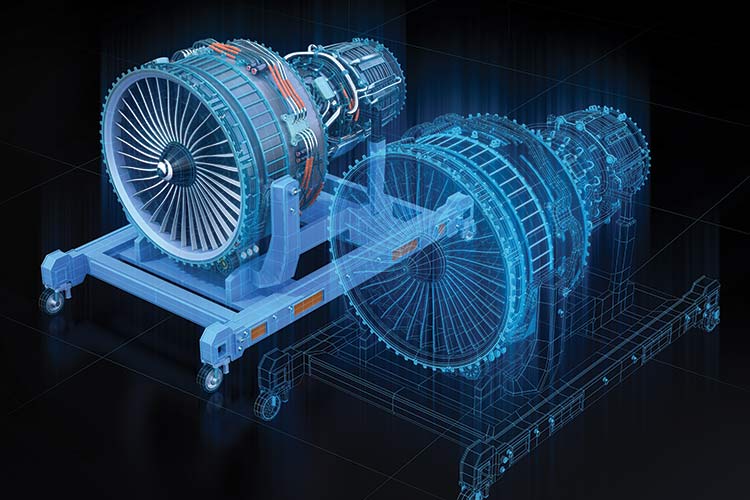
A specific example: BMW uses comprehensive 3D simulations of its production lines to validate changes before they are physically implemented. The result: a 30% reduction in maintenance costs and a 20% reduction in downtime (source: BMW Group, Innovation Report 2024). Another major advance: the integration of 3D reconstruction algorithms with finite element analysis (FEA) now makes it possible to visualize mechanical stresses on complex equipment (wind turbines, turbines, etc.), facilitating inspections without dismantling (study: Zheng et al., “AR-Based Structural Health Monitoring,” IEEE Transactions on Industrial Informatics, 2025).
AR and VR: essential tools for faster and safer maintenance
AR (Augmented Reality) and VR (Virtual Reality) are no longer gadgets, but operational solutions adopted by industry leaders.
AR: an interactive guide for technicians
With AR, operators see the following superimposed in real time on their field of vision:
• Maintenance instructions (steps, necessary tools, checkpoints).
• Technical data (diagrams, sensor values, failure history).
• Safety alerts (risk areas, live equipment).
Use cases:
• Dassault Systèmes (DELMIA Augmented Experience) equips aerospace and automotive technicians with AR glasses to reduce errors by 40% and speed up interventions by 25% (Source: Dassault Systèmes, White Paper “AR in Industrial Maintenance,” 2024).
• Siemens uses AR to guide gas turbine maintenance, with an ROI measured at 18 months (Siemens Energy, Digitalization Report, 2024).
VR: training and simulating without risk
VR enables you to:
• Train new technicians on expensive or dangerous equipment (e.g., nuclear power plants, offshore platforms).
• Replay complex failures to analyze root causes.
• Collaborate remotely between experts and on-site operators.
Key figures:
• 1,200 factories will have adopted AR/VR solutions for maintenance by 2025 (IndustryARC, "Global AR/VR in Manufacturing Market Report, 2025).
• The AR-assisted maintenance market is expected to grow from $2.8 billion in 2025 to $6.4 billion in 2035, driven by AI and IoT (Future Market Insights, "AR in Industrial Maintenance Forecast, 2025).
The Industrial Metaverse: towards collaborative maintenance without limits
The Industrial Metaverse is the next revolution: an environment where AR, VR, Digital Twins, IoT, and edge computing combine to create an interactive and collaborative digital twin.
How does it work?
• Technicians wear AR/VR headsets to interact with virtual machines in real time.
• IoT sensors feed the Digital Twin with live data (vibrations, temperature, pressure).
• Remote experts can guide operations via avatars or 3D annotations.
The benefits are compelling: reduced travel (lower costs, smaller carbon footprint), collaborative maintenance between remote sites, and continuous optimization thanks to AI that analyzes data in real time.
The figures:
• The Industrial Metaverse market will be worth $27.89 billion in 2024 and will grow by 38.9% per year until 2034 (Fact.MR, "Industrial Metaverse Market Analysis, 2024).
• 60% of major manufacturers (automotive, energy, aerospace) will have adopted a Metaverse solution by 2027 (McKinsey, “The Industrial Metaverse: A Trillion-Dollar Opportunity,” 2024).
This evolution is part of the transition to Industry 5.0, where humans remain at the heart of processes, assisted by immersive and intelligent technologies.
XR + AI: Reinventing the transmission of expertise

Extended Reality (XR, which combines AR/VR/MR (Mixed Reality)) coupled with AI now makes it possible to:
• Create virtual assistants that guide technicians step by step (e.g., “Show me how to replace this bearing”).
• Analyze operators' movements in real time to detect errors (via computer vision).
• Capitalize on the expertise of senior experts before they leave (recording procedures in VR).
For example, Microsoft HoloLens + Dynamics 365 Guides enables ThyssenKrupp to reduce technician training time by 50% (Source: Microsoft Case Study, 2024).
AR conversational agents (such as those developed by Tomkou et al., “AI-Powered AR Assistants for Field Technicians,” IEEE Access, 2025) answer technical questions in context, just like a human expert.
In conclusion: smarter, safer, and more sustainable maintenance
The convergence of 3D simulation + AR/VR + AI + IoT is transforming industrial maintenance into a process that is:
• Predictive (fewer breakdowns, lower costs).
• Immersive (optimized training and intervention).
• Collaborative (experts and operators connected in real time).
• Sustainable (reduced travel, optimized resources).
Tomorrow, maintenance will no longer be a constraint, but a competitive advantage. Companies that adopt these technologies today gain agility, security, and performance, and prepare for the Industrial Metaverse, where the physical and digital worlds will become one.
Sources :
BMW Group, Rapport Innovation 2024 – bmwgroup.com/innovation
Zheng et al., "AR-Based Structural Health Monitoring", IEEE Transactions on Industrial Informatics, 2025 – ieee.org
Dassault Systèmes, White Paper "AR in Industrial Maintenance", 2024 – 3ds.com/ar
Siemens Energy, Rapport Digitalization, 2024 – siemens-energy.com/digitalization
IndustryARC, "Global AR/VR in Manufacturing Market Report", 2025 – industryarc.com
Future Market Insights, "AR in Industrial Maintenance Forecast", 2025 – futuremarketinsights.com
Fact.MR, "Industrial Metaverse Market Analysis", 2024 – factmr.com
McKinsey, "The Industrial Metaverse: A Trillion-Dollar Opportunity", 2024 – mckinsey.com
Microsoft Case Study (ThyssenKrupp), 2024 – microsoft.com/casestudies
Tomkou et al., "AI-Powered AR Assistants for Field Technicians", IEEE Access, 2025 – ieee.org